- Blog
- Is It a Good Idea to Buy a Used Fleet Vehicle?
Is It a Good Idea to Buy a Used Fleet Vehicle?
Feeling unsure of whether ex-fleet cars would sell? We’ll show you why these vehicles perform well, what to check before buying, and how to move them quickly at your dealership.
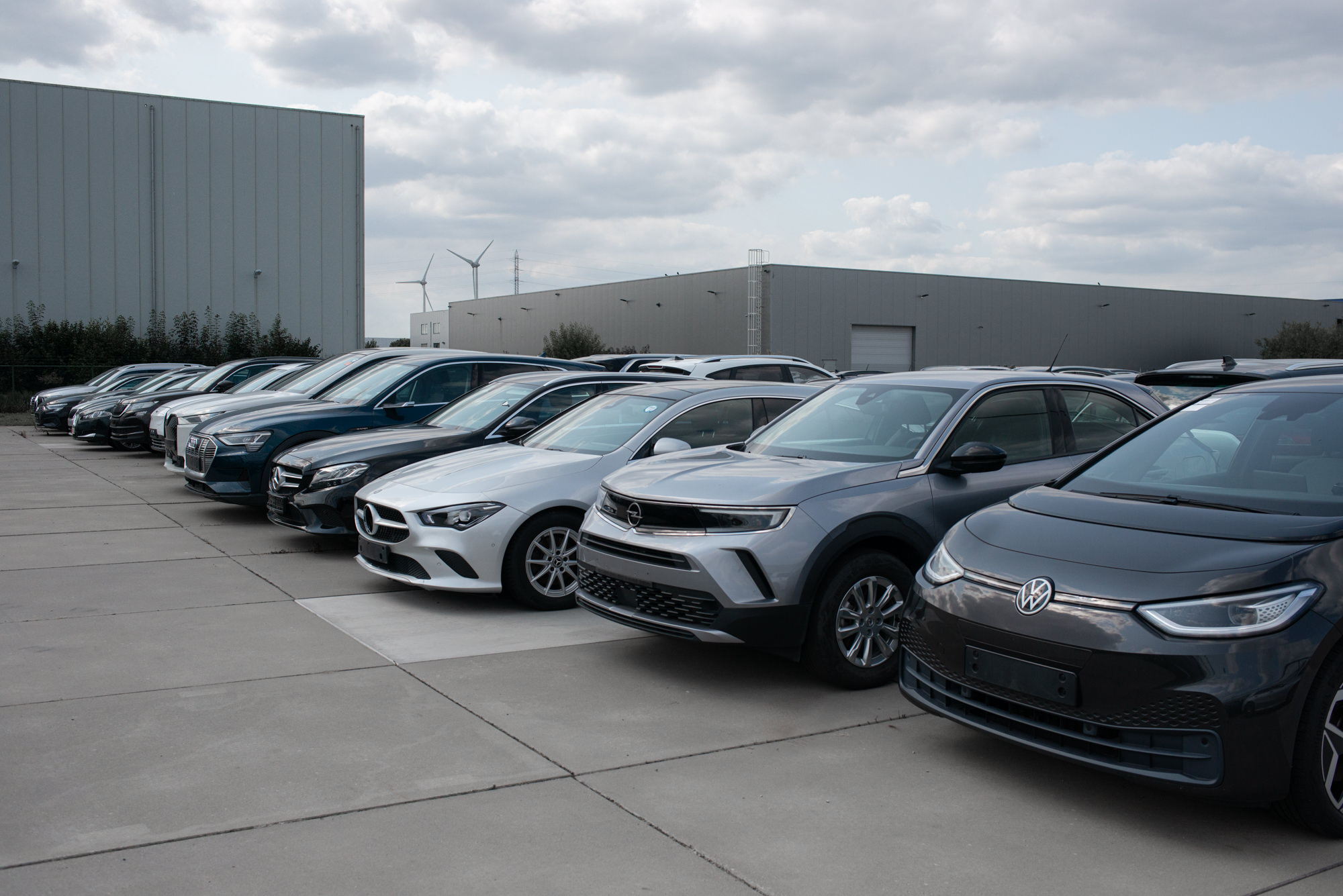
Ex-fleet cars are usually well-maintained, documented, and replaced on a fixed schedule, which makes them predictable and easy to evaluate.
In this article, we’ll look at why used fleet vehicles are a wise choice for car dealers and what to check before buying them.
Belangrijkste punten
- Ex-fleet vehicles are usually well-maintained, clearly documented, and sold at only three or four years of age.
- Before buying, check the service history, appraisal reports, VAT scheme, photos, and transport costs so you always know exactly what you’re bidding on.
- Clear communication with your customers about how fleet cars are used and maintained makes it much easier to close sales.
What is considered a fleet vehicle?
As opposed to used cars that were owned by private individuals, fleet vehicles are those that were previously owned by businesses.
For instance, a fleet vehicle might mean that a car was owned by:
- Leasing firms
- Car rental companies
- Corporate fleets
- Taxi companies
So, if a vehicle was registered to a business for company use, it’s considered a fleet vehicle.
Reasons why profitable dealers source ex-fleet cars
Ex-fleet cars follow a different lifecycle than privately owned vehicles. In most cases, this makes them more attractive to car traders, and we’ll now see precisely why.
► Lower acquisition costs = higher margins
A private seller can sell a car that's a year old, or fifteen years old. Most fleet cars, however, are sold at around three or four years.
Because this cycle repeats for thousands of cars, the pricing becomes much more predictable.
In many cases, these cars are a bit cheaper than similar privately owned ones, which makes it easier for you to keep more of the profit when you resell them.
► Trustworthy and complete documentation
Ask a private seller when they last changed the brake pads or which workshop serviced the car, and there’s a good chance they won’t remember. But with fleet vehicles, that problem doesn't exist.
When a contract ends, fleet and leasing companies typically require complete service history, damage reports, and all vehicle documents before the car is remarketed.
On eCarsTrade, you’ll see that some cars come with service histories that include mileage at each visit, and the exact work done.
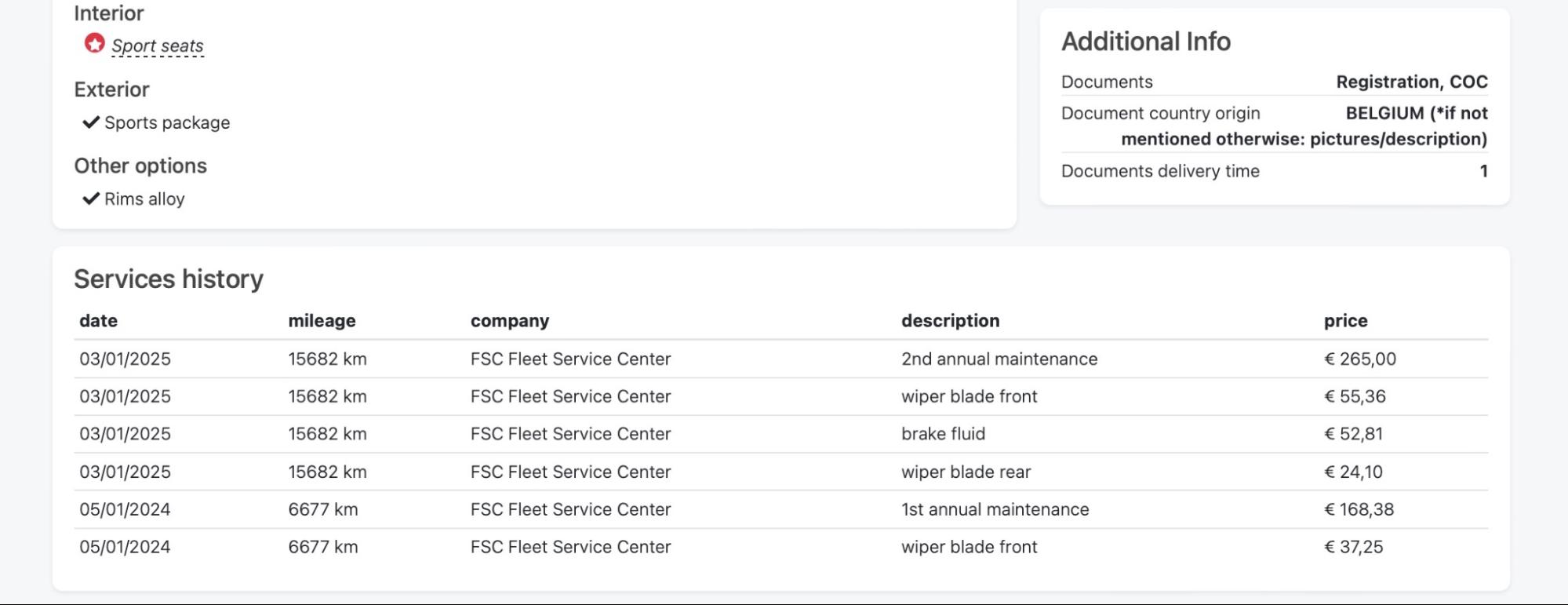
A lot of our suppliers also work with independent inspection services like DEKRA or Macadam, which means that many cars come with a professional appraisal report.
If a report is available, you’ll find it in the Documents section of a car listing, as you can see below.
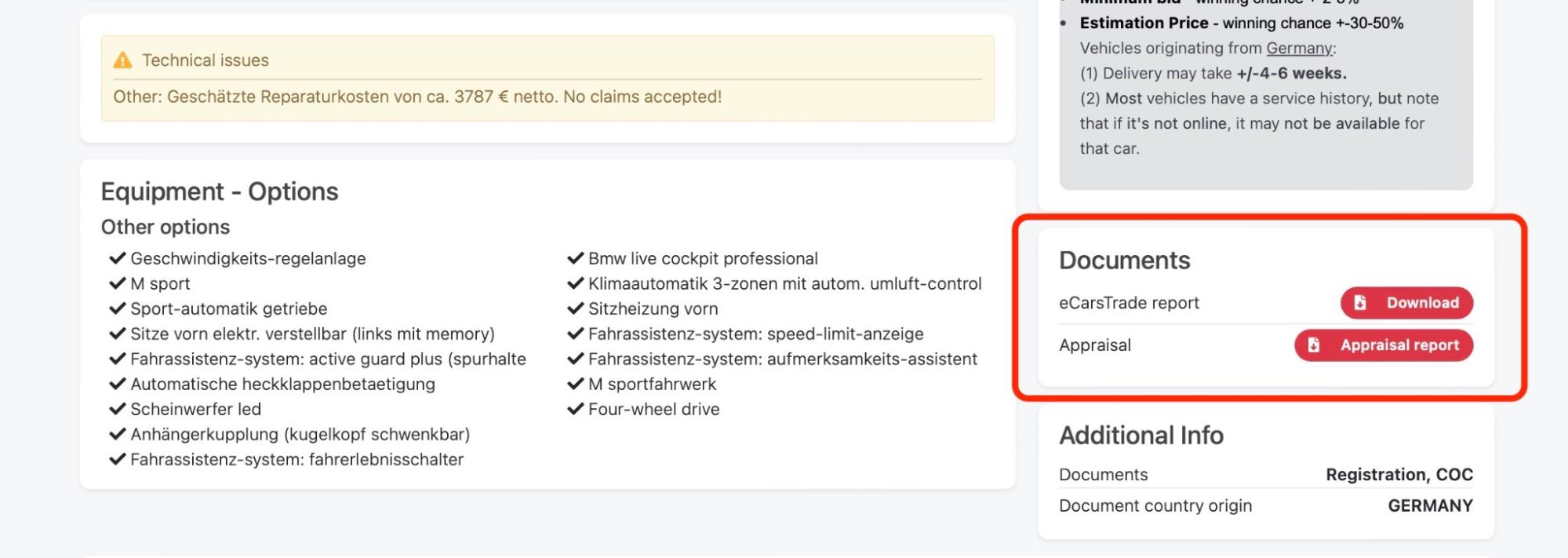
For you as a trader, this means that ex-fleet cars almost always come with a clear documentation you can rely on and easily share with your buyers.
► Better technical condition
According to a 2025 report by ACEA, the average car on EU roads is about 12 years old.
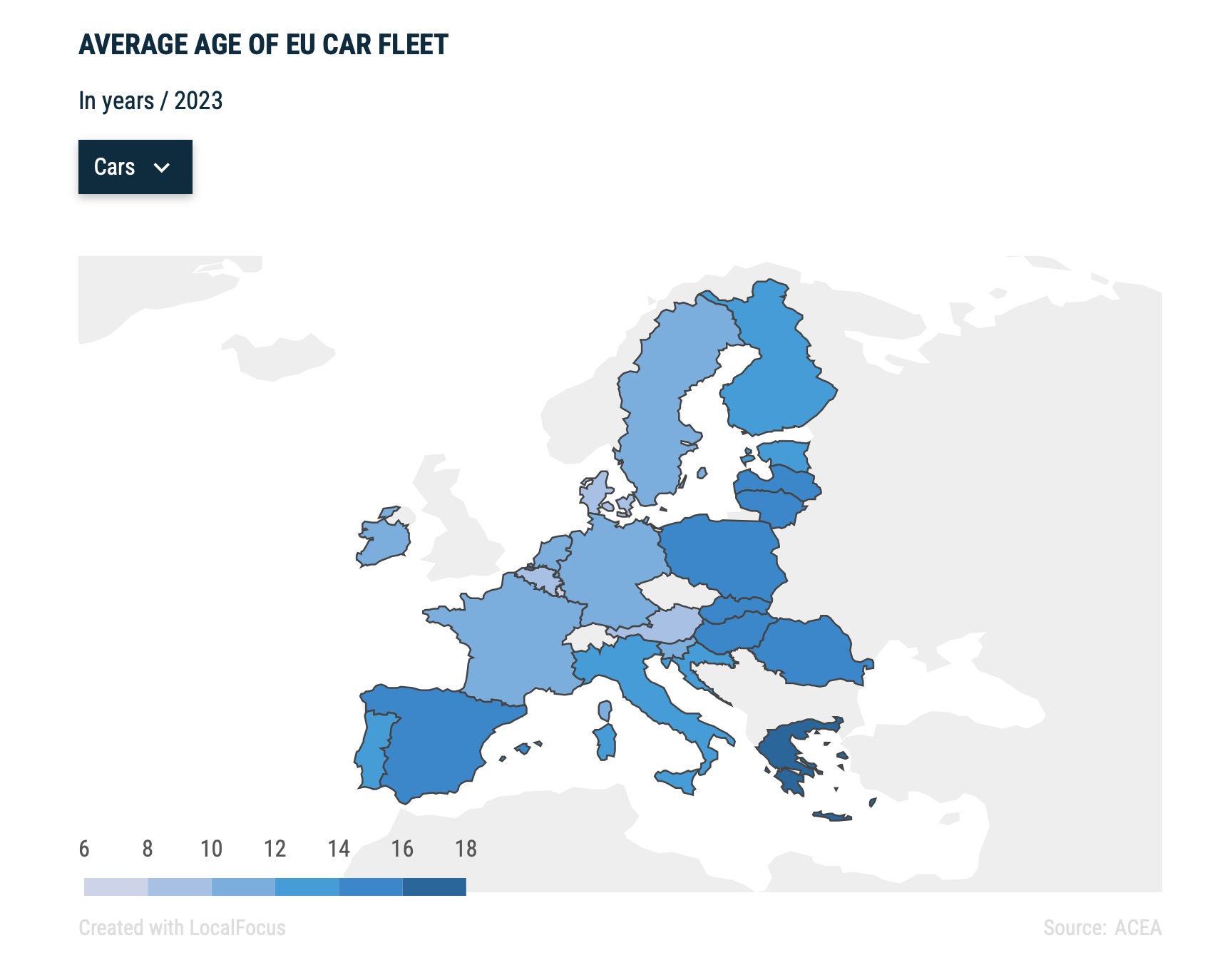
Image source: ACEA
When you compare that to used fleet vehicles that are sold at three or four years of use, it’s clear that fleet cars are generally newer and better maintained.
Even if fleet cars often have higher annual mileage, they’re serviced on a fixed schedule and checked carefully at the end of the contract, since the lessee wants to avoid extra charges for missed maintenance or damage.
The combination of younger age and consistent maintenance often means ex-fleet vehicles are in better overall shape than many privately owned cars.
► Fast inventory turnover
Another advantage of stocking used fleet vehicles is that they sell more quickly.
Autovista states that dealers in major EU markets need around 34 to 60 days on average to sell a used car, depending on the country and the month.
Younger, well-documented cars are often the first to go at dealerships. That’s why many traders like ex-fleet vehicles when they want cars that cannot be sold for months.
► Access to vehicles that are not available to private buyers
If you only stocked your dealership through regular channels where private individuals sell their cars, you’d miss out on quality ex-lease cars that are only available to B2B sources.
Leasing companies, rental fleets, and corporate fleets release thousands of young cars every year, and most of them go straight into dealer-only auctions or dedicated remarketing platforms.
By participating in these auctions, you’re essentially getting access to quality cars that private buyers never really get the chance to buy directly.
Which fleet vehicles should you stock?
As we’ve seen, not all fleet vehicles are the same. They come from different types of companies and are used in different ways.
To help you choose the best stock for your dealership, here’s a quick overview of the three main categories you’ll see on B2B platforms.
|
Type of fleet vehicle |
Who drives it |
Pros |
Cons |
|
Ex-lease vehicles |
Usually one main user |
Predictable condition, strict maintenance schedule |
Slightly higher mileage in some cases |
|
Rental fleet cars |
Many short-term drivers |
Very young cars, regular servicing |
Mixes driving styles, possible cosmetic damage |
|
Corporate fleet and company cars |
Employees |
Maintenance can vary between companies |
Each category has its own advantages, and understanding these differences makes it much easier to choose the right fleet vehicles for your needs.
Quick checklist for buying ex-fleet cars
Now that you’ve seen why ex-fleet cars can be a great idea, you might be thinking about adding them to your stock.
Still, before you place a bid on a fleet vehicle, it helps to go through a few simple checks so that you can understand the car’s real condition and estimate your costs.
- Buy from trustworthy sources such as eCarsTrade, where supplier partners are verified.
- Check the service history if it’s available for the vehicle.
- Read the VIN report if there’s one.
- Read the appraisal or inspection report (DEKRA, Macadam, or similar) when provided.
- Review all car photos carefully, including interior, exterior, and any noted damage.
- Consider the car’s location and include transport costs into your final price.
- Verify which VAT scheme the car is sold under (standard VAT vs margin) to calculate the total cost correctly.
And with that, you’re ready to place a bid knowing exactly what you’re getting into.
Fleet vs personal use - how to address customers’ concerns?
By this point, you’re informed to make good decisions for your dealership.
But what about your customers? They might still have doubts about cars that were previously owned by companies.
To help them understand the value of these cars, it’s good to address these concerns clearly and honestly.
#1 "Aren’t fleet vehicles more worn out due to higher mileage?"
Remind the buyers that higher mileage doesn’t automatically mean worse condition.
Many fleet cars drove mainly on highways, which are much easier on the engine and brakes than short city trips.
Combine that with regular servicing, and you’ll see that many ex-fleet cars actually age better than privately owned ones.
#2 "Fleet drivers abuse company’s vehicles"
The best answer to this statement is that in leasing arrangements, damages lead to extra charges to the lessee, so drivers are motivated to treat the car properly.
They know the car is monitored and must be returned in good condition, so careless driving is actually the exception, not the rule.
#3 "Personal cars are better taken care of by owners"
Private owners can skip services or delay repairs when costs come up. Fleet cars, on the other hand, stick to scheduled maintenance without exception.
That’s why many ex-fleet vehicles show up on the used market with a more reliable, traceable service history than the average privately owned car.
Browse thousands of top-quality fleet vehicles on eCarsTrade!
Now, let’s get to the actual part of how you can buy a fleet vehicle.
If you’re ready to include documented ex-lease cars to your dealership’s stock, you should start your search on eCarsTrade.
eCarsTrade specializes in precisely this category, meaning that the platform lets you access thousands of used cars that were company owned and that were regularly maintained.
Also, you’ll find a wide range of LCVs here, which is ideal for traders looking for reliable vans and work vehicles.
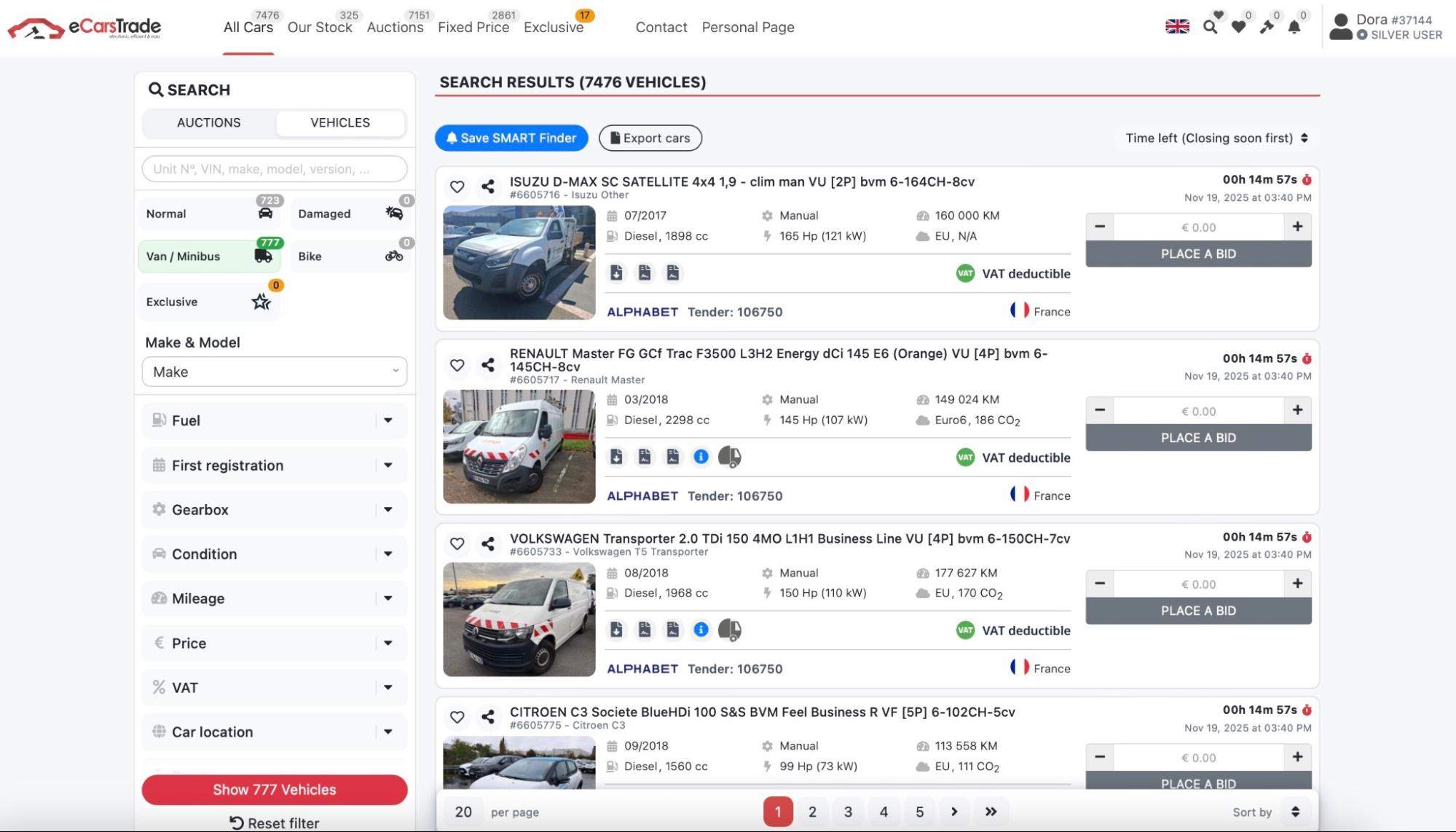
You can filter the vehicles by your preferred VAT scheme, fuel type, and more, and participate in online auctions.
Once you win the vehicle, you can arrange the payment and delivery through eCarsTrade, so the whole process stays quick and straightforward.
How to sell ex-fleet cars quickly?
Lastly, when you’ve stocked up on ex-fleet cars, there are a few steps that can help you sell them faster.
Take a look at our library of resources to see what aspects of your dealership you can refine and sell cars more quickly.
- How to take great car photos
- Best online marketing channels and strategies for car dealerships
- Social media for dealerships
- Building a sales funnel in automotive sales
- Pricing strategies for car dealers
- Car dealership automation
What used fleet cars mean for your dealership
Ex-fleet vehicles can be a reliable, well-documented source of stock that’s easier to evaluate and easier to resell.
When you know what to look for and buy from trusted partners, these cars can bring steady sales to your dealership.
So, why not add a few to your next purchase and test the results yourself?
We werken samen met gerenommeerde leveranciers om u een brede selectie tweedehands auto's van verhuur- en kortetermijnverhuurbedrijven aan te bieden:
Ontdek alle voormalige verhuurauto's die te koop staan!