- Blog
- How to Import a Car to Latvia
How to Import a Car to Latvia
See what documents you need to prepare, what taxes you need to pay, and what steps to follow to import used cars to Latvia.
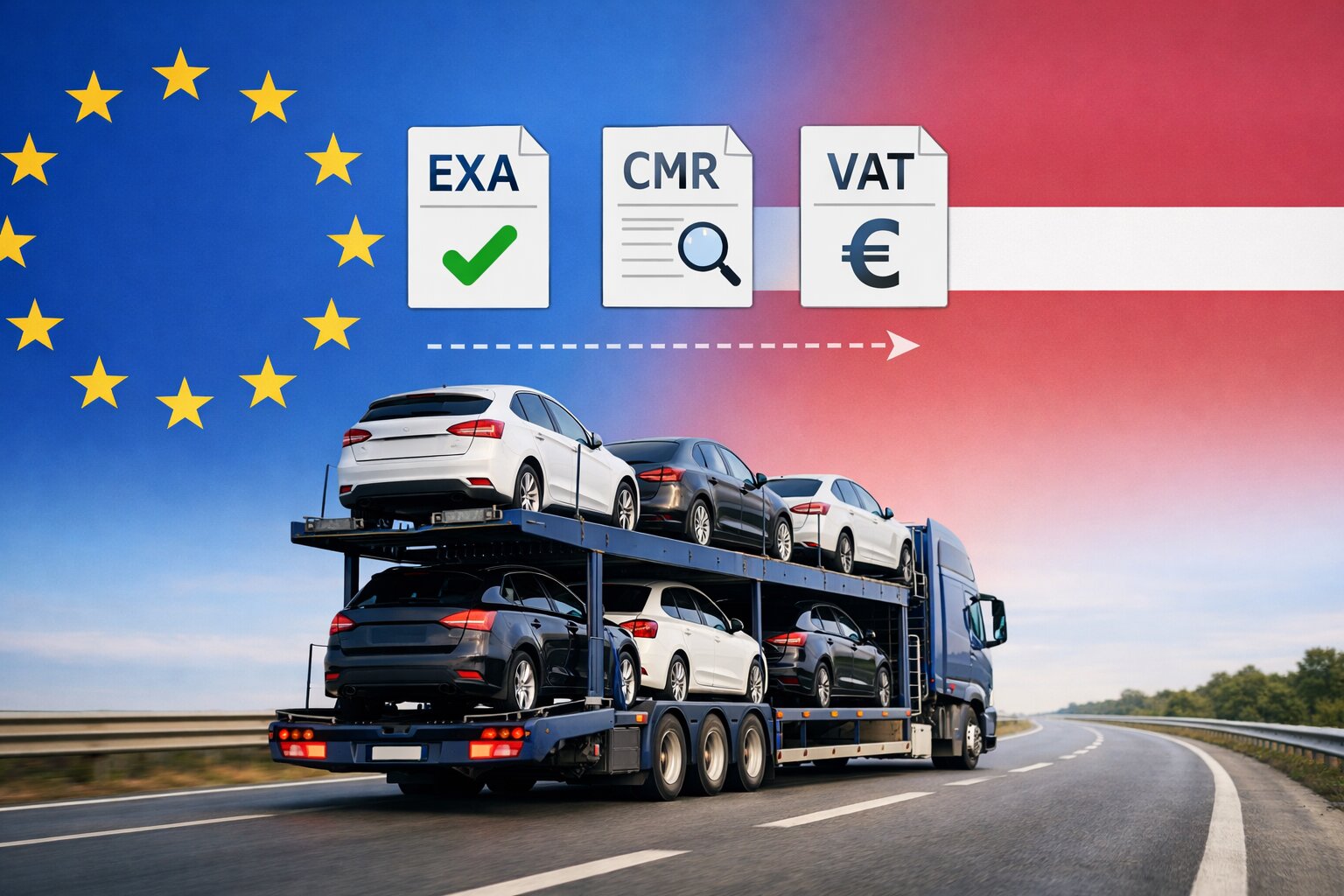
Would you like to expand your dealership’s offer, or buy vehicles that match local demand more closely?
In that case, importing used cars to Latvia might be a good option for you.
To make the import process easy, you need to prepare the right documents and understand what taxes you’ll have to pay.
In this guide, we’ll show you the main steps, documents, and costs to keep in mind before you buy.
Documentation for importing a vehicle to Latvia as a business
Here are the main documents you should prepare for the import process.
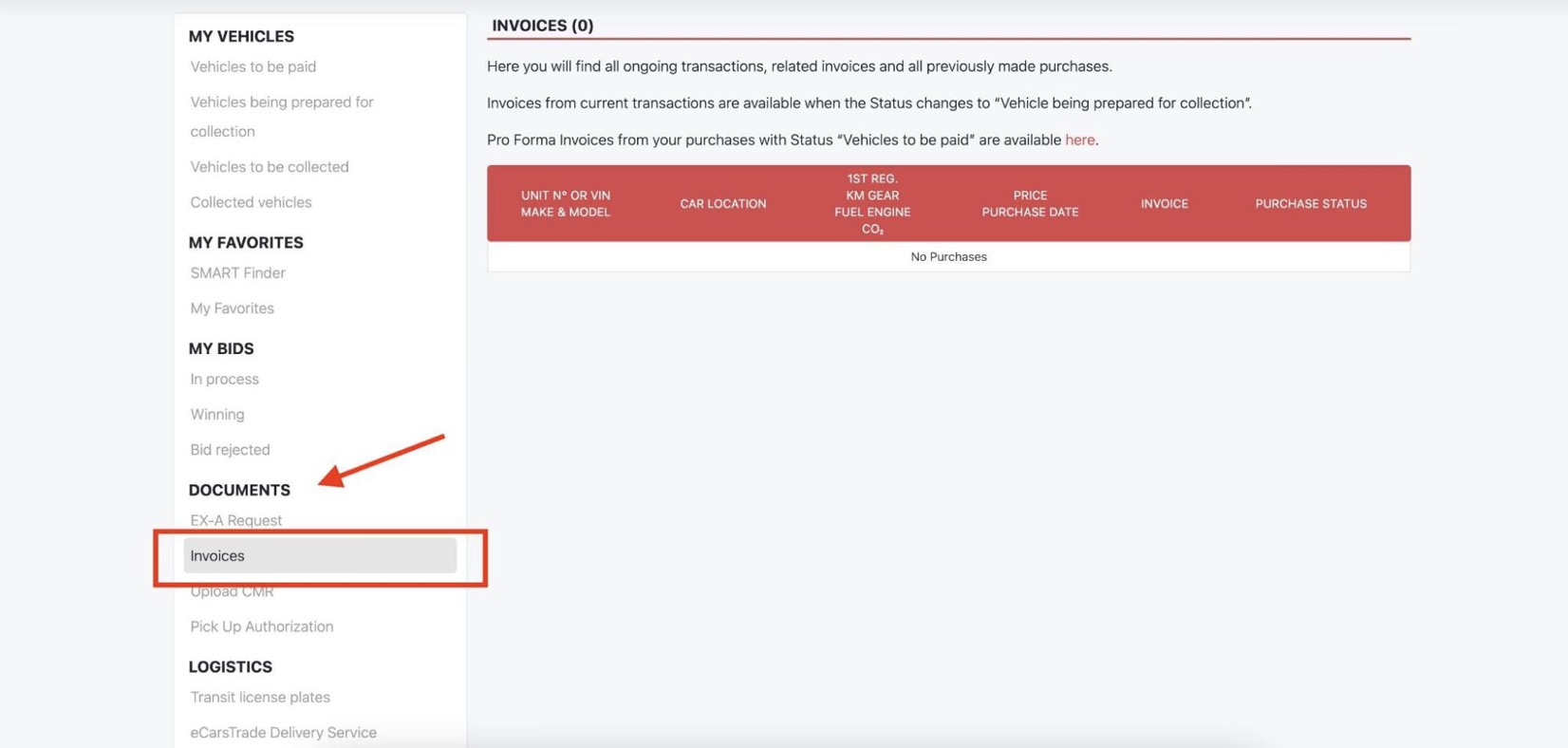
► Vehicle purchase invoice
To prove the ownership of the vehicle, you’ll need your vehicle purchase invoice.
This is one of the most important documents in the import process, and it shows:
- Buyer and seller
- Vehicle details
- Date of sale
- Purchase price
- VAT scheme used for the sale
If you’ve bought a vehicle through eCarsTrade, you can access your vehicle purchase invoice on your Personal page.
► Original registration papers
The next document to prepare is the car’s original registration paperwork.
All vehicles on eCarsTrade are sold with their original registration papers included, so that’s another document you’ll automatically receive when buying through this platform.
► Proof of identity and business registration
You’ll need proof of identity, like a passport or ID card, for import.
If you’re importing as a legal entity (like your dealership), you’ll need a document proving the company’s legal status.
However, you may not need to provide this if the company is already registered in the Latvian Register of Enterprises.
That’s why it’s best to check with the CSDD (Road Traffic Safety Directorate) in advance to see which company documents you’ll need in your case.
► Certificate of Conformity (not necessary in most cases)
A Certificate of Conformity (CoC) is a document that confirms the vehicle meets EU standards.
In Latvia, you usually won’t need to prepare this document for most imports.
CSDD may require a Certificate of Conformity for first registration. However, they also list many exceptions, so in many cases, importers don’t need to submit this document.
So, you most likely won’t need a CoC.
But because the requirement depends on the vehicle’s documents and approval details, you should contact CSDD in advance and confirm if you need a CoC for the vehicle you’re importing.
► Certificate of vehicle data verification
Unlike the documents you’ve seen above, the Certificate of vehicle data verification isn’t something you’ll prepare in advance.
You’ll receive the certificate during Vehicle data verification at CSDD, and you’ll later take it to register the vehicle.
Essentially, this is a document confirming that the car’s identification and technical data have been checked for first registration in Latvia.
Taxes when importing a Car to Latvia
Now, let’s see an overview of the taxes you’ll encounter during import to Latvia.
VAT
For used cars, VAT depends on two things: whether you’re buying from the EU or outside the EU, and on the VAT scheme used.
Let’s say you imported a car from outside the EU.
In that case, import VAT is normally charged at 21%, calculated on the customs value plus import duty.
But in a more likely scenario that you’re buying a car from another EU member state, you’ll have to check what VAT scheme was used.
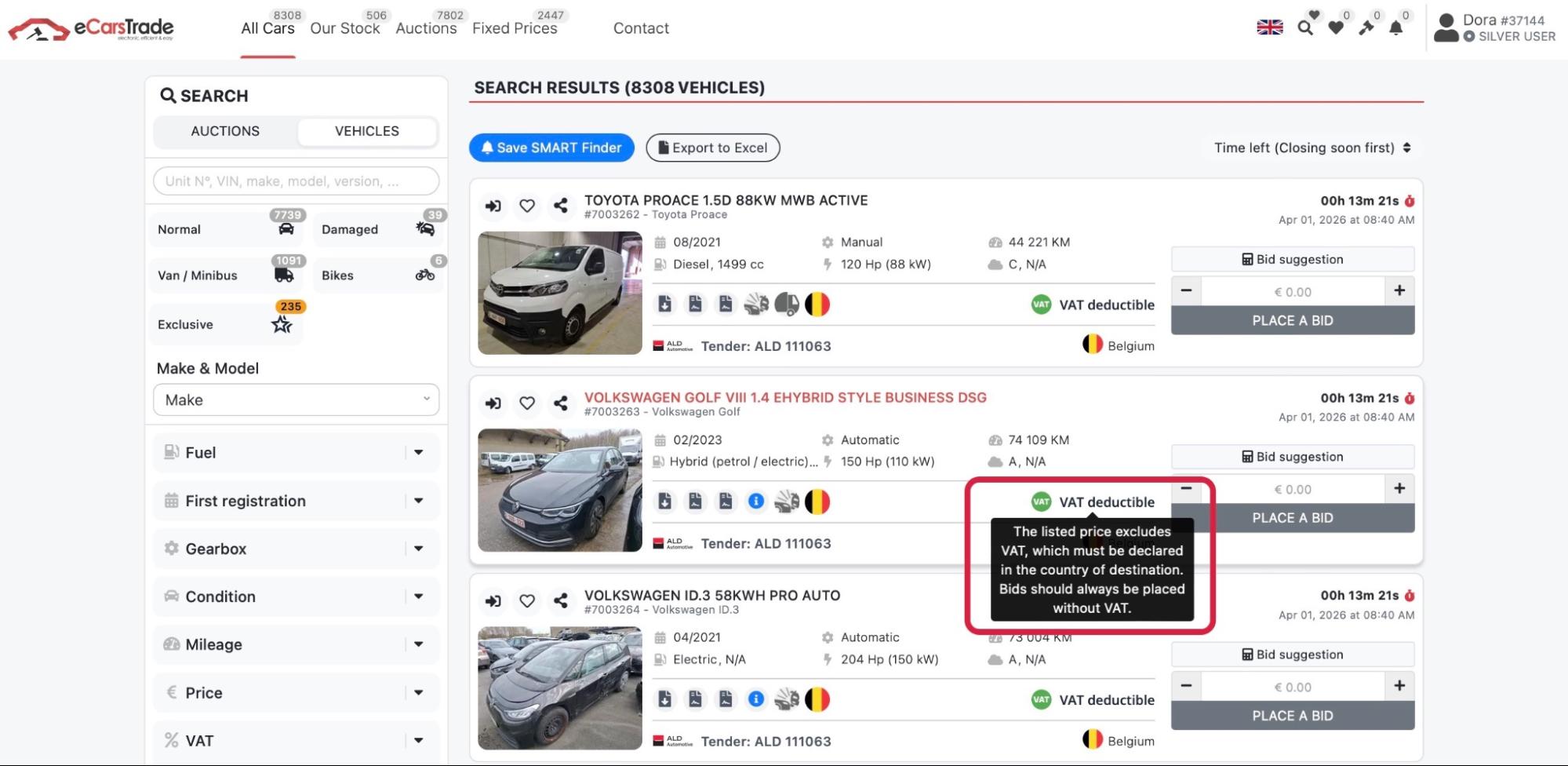
If the car is sold under the standard VAT system, the listed price doesn’t include VAT.
This means you buy the vehicle without VAT, and then declare and account for VAT in Latvia.
On eCarsTrade, these vehicles are marked as VAT deductible.
And in case a vehicle is sold under the margin scheme, VAT is already included in the price and you can’t deduct it separately.
On eCarsTrade, such cars are labeled as Margin - VAT not deductible.
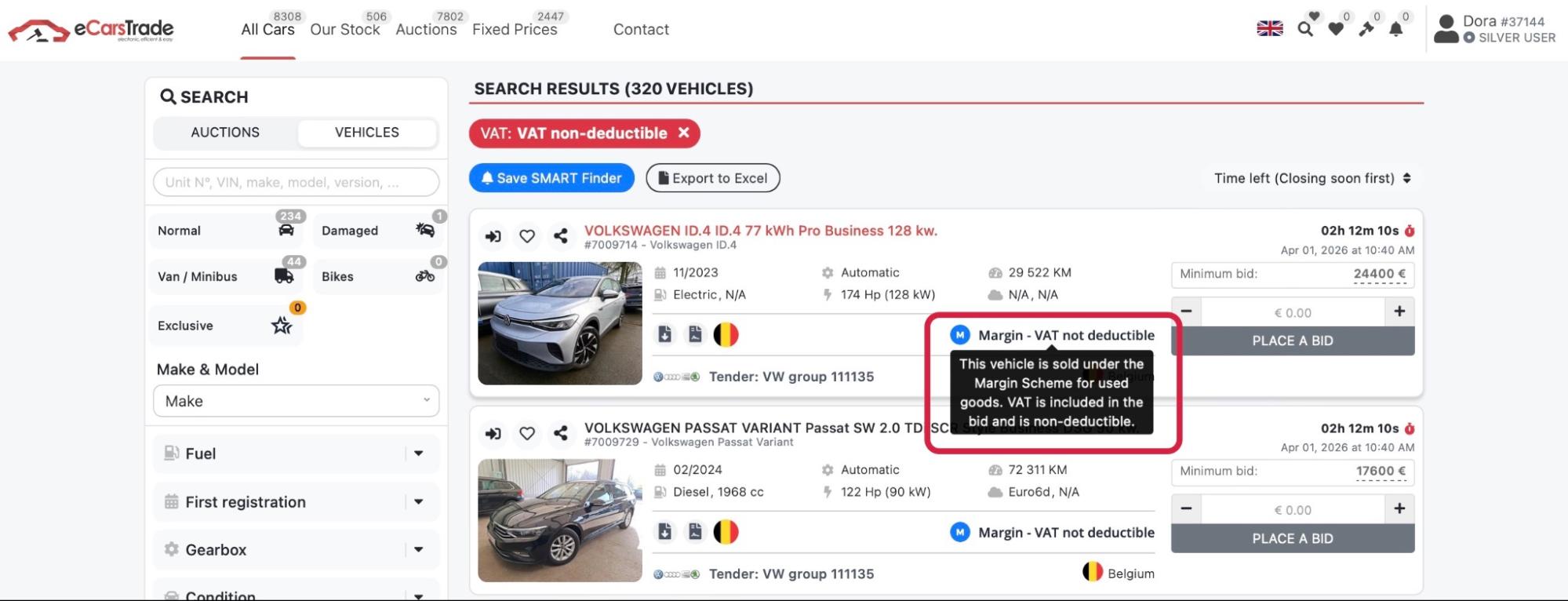
So, remember to check the VAT scheme before buying, because it affects the total cost of the vehicle.
Customs duty
If you import a used car into Latvia, you won’t need to pay customs duty.
But if you import a car from a country outside the EU, you’ll have to pay customs duty, or import duty.
This duty is based on the car’s customs value.
For a passenger car, a typical rate is 10%, which means the amount to pay is calculated as 10% of the car’s customs value.
Vehicle operation tax
In Latvia, the Vehicle operation tax is one of the standard taxes linked to registration and operation.
It must be paid annually for vehicles registered in Latvia or being registered in Latvia for the first time.
The rate mainly depends on the vehicle’s first registration date and its CO2 emissions. You can check the rates on the official Latvian State Revenue Service’s page.
Since electric vehicles don’t produce CO2, they’re exempt from paying this tax.
Natural resources tax
Natural resources tax is charged when a vehicle is registered in Latvia for the first time.
The standard amount for passenger cars and LCVs is EUR 110.
Step-by-step process - from purchasing a car to importing it to Latvia
Now that you know the documents and taxes, let’s go through the actual import process step by step.
1. Research and buy the car
Start by looking for cars that match demand in Latvia and fit your budget after taxes and transport.
When sourcing through eCarsTrade, you can save time by viewing a big number of vehicles from different auctions in one place.
You can also use filters for brands and models, fuel type, VAT scheme, mileage, and more.
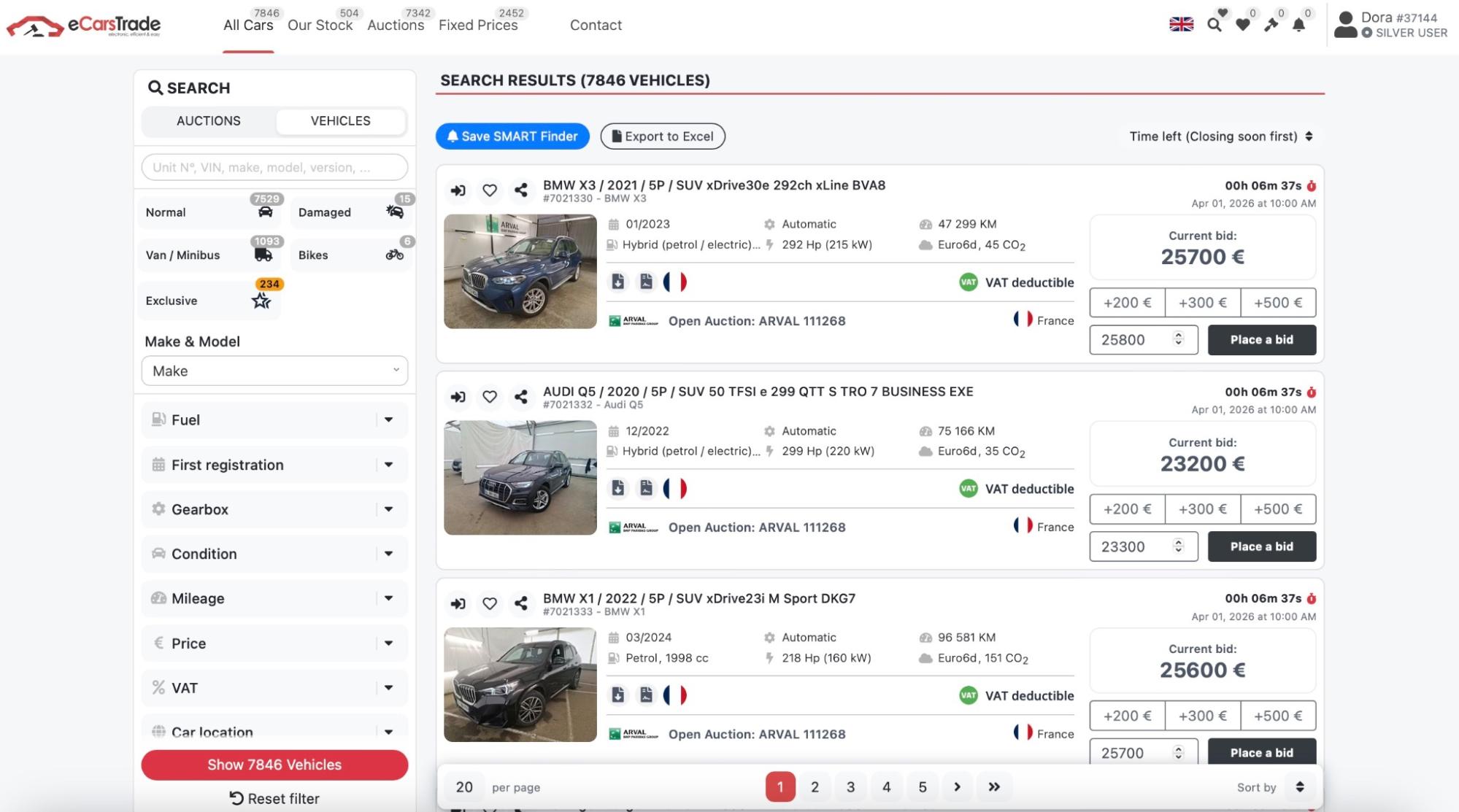
When you’ve found a vehicle that fits your business goals, you can bid on it.
After you’ve won the auction or bought a car at a fixed price, you’ll receive your vehicle purchase invoice, and the import process can start.
2. Arrange transportation
Once you buy the car, the next step is to organise transport to Latvia.
The most practical method is the eCarsTrade Delivery Service, in which our team organizes paperwork and transport for you.
Alternatively, you could drive the car yourself or hire a truck or car transporter to bring it to Latvia, but then you’d have to spend more time organizing the transport.
3. Clear customs
If you buy the car from another EU country, you don’t need to complete import customs clearance in Latvia.
But if the vehicle comes from outside the EU, you’ll need to complete customs formalities before registration.
This includes submitting an electronic customs declaration, calculating the customs value, and paying import duty and 21% import VAT.
4. Go through data verification at CSDD
The next step is data verification at CSDD.
When you bring the car to a CSDD centre, you’ll have to present these documents:
- A passport or ID card
- Original registration papers (or a similar document with the vehicle’s technical data)
- A document proving ownership rights, like the vehicle purchase invoice
After the check, CSDD will issue the certificate of vehicle data verification, which you’ll then use for registration. The certificate is valid for 30 days.
5. Pay the required taxes and complete registration
When the car passes data verification, you can move on to the final registration step in Latvia.
At this stage, make sure you’ve paid all the required taxes and fees.
Depending on the vehicle and where it comes from, this may include:
- VAT
- Customs duty (if the car was imported from outside the EU)
- Vehicle operation tax
- Natural resources tax
- CSDD registration fees
After that, you can register the vehicle with CSDD.
Get to know the Latvian car market
ACEA states that the average age of a Latvian passenger car is 14.4 years.
Since Latvia has a relatively old fleet, many buyers look to the used car market for more affordable replacements instead of brand-new vehicles.
In terms of the most popular fuel types, it’s worth knowing that diesel cars made up 62.6% of passenger cars in Latvia in 2023. Petrol cars accounted for 28.6%.
More recent data from 2025 shows that EVs are becoming more popular in Latvia.
Battery electric vehicles accounted for 7.1% of all new passenger car registrations, which was 27% more than in 2024.
Still, these vehicles make up a much smaller share of Latvia’s overall car fleet than diesel and petrol cars, so used car traders will most likely still see the strongest demand for ICE vehicles.
Now, let’s take a look at the best-selling new cars in Latvia, to see which brands and body types Latvian buyers already know and trust.
Toyota, Skoda, and Volkswagen have consistently sold well in the new-car market.
Among the new-car models that have performed well in Latvia are:
- Toyota Yaris Cross
- Skoda Kodiaq
- Toyota RAV4
- Volkswagen Tiguan
- Skoda Octavia
- Kia Sportage
Based on that, you could focus on importing well-known brands and practical body types that already have clear demand in Latvia, as such cars will likely be easier to resell.
Importing a car to Latvia - FAQ
► What documents do I need to import a car to Latvia as a business?
The main documents are the vehicle purchase invoice, original registration papers, proof of identity, and if needed, a document proving your company’s legal status. Later, you’ll also need the certificate of vehicle data verification from CSDD. A Certificate of Conformity is not needed in most cases.
► What is the certificate of vehicle data verification?
This is a document issued by CSDD after they check the car’s identification and technical data. You receive it during the data verification step, and then use it for registration.
► What taxes do I need to pay when registering a car in Latvia?
Depending on the vehicle and where it comes from, you may need to pay VAT, customs duty (if importing from outside the EU), vehicle operation tax, natural resources tax, and CSDD registration fees.
► Do I pay customs duty when importing a car to Latvia?
Not if you buy the car from another EU country. But if you import a car from outside the EU, customs duty applies.
► Do electric cars pay vehicle operation tax in Latvia?
No. EVs don’t produce CO2, so they’re exempt from this tax.
Het importeren van voertuigen uit Europa kan ingewikkeld zijn, maar eCarsTrade is er om het proces te vereenvoudigen. Zo doen we dat: