- Blog
- How to Import Damaged and Salvage Vehicles?
How to Import Damaged and Salvage Vehicles?
Learn what damaged and salvage vehicles are, why they can be a good option for your dealership, and how to import them profitably.
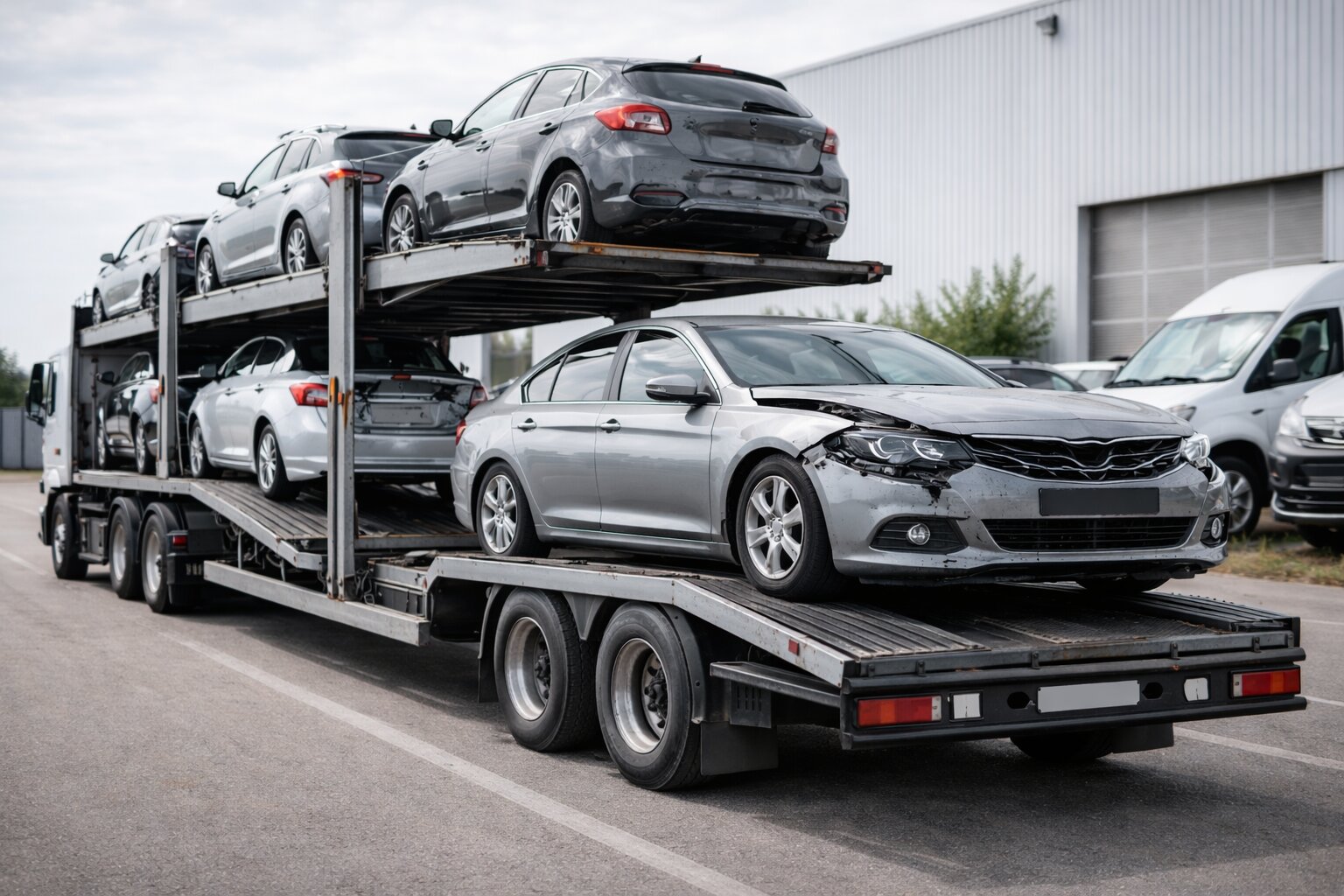
Importing damaged and salvage cars can be a great business idea, as long as you understand the rules before you buy.
Knowing these rules is important because the import process is not always the same as for standard used cars.
That’s why we’ll show you the main rules and documents to check before importing a damaged or salvage vehicle.
Key takeaways for importing repairable cars
- You can import repairable damaged cars like all other normal cars.
- In most cases, you’ll need the usual import documents.
- Depending on the country, you may also need an extra inspection after repair.
- Before you bid, check the damage, the documents, and all extra costs.
Key takeaways for importing vehicles for parts
- If a car is non-repairable, it may be treated as an end-of-life vehicle.
- ELV vehicles have to go through authorised treatment and dismantling instead of the normal registration process.
- Before you buy a non-repairable vehicle, check the local rules and all transport costs.
Crucial EU definitions
Let’s look at key phrases related to damaged, salvage, and end-of-life vehicles.
► Damaged vs salvage vs write-off
There’s no standard way in which the EU defines these terms.
But in practice, here’s how dealers mostly use them when assessing what they can buy, repair, register, or resell.
|
A damaged car |
A car with accident, flood, previous theft damage, hail, vandalism, or other damage. |
|
A salvage car |
A car that was declared a total loss by an insurer or sold through damaged/salvage channels. |
|
A write-off car |
The phrase write-off doesn’t always mean that the car is completely non-repairable; it often means the cost of repair was considered too high compared to the car’s value. |
So, when browsing damaged cars to buy, don’t focus on the label alone.
The real question is whether you can still legally transfer, repair, or register in the destination country.
Repairable vs non-repairable
The difference between these two is often what matters the most to dealers. You can still import, fix, inspect, and register a repairable vehicle.
But if a car is non-repairable, it can be treated as an ELV (end-of-life vehicle) instead.
The European Commission’s ELV regulation explicitly states that a vehicle should be considered ELV when it is irreparable.
When is a vehicle considered ELV (end-of-life)?
At the EU level, ELV is linked with waste. Once a car is declared an ELV, it can’t be driven again.
In other words, a vehicle is at ELV risk when the damage is so extensive that repair is not realistic or safe.
Such cars have to go through authorised dismantling facilities, and aren’t suitable for driving or resale.
Definitions per country
Labels and terminology related to salvage cars are different across countries, so you shouldn’t rely on the word “salvage” alone.
Here are a few country-specific terms and rules worth knowing.
- France: Before you sell a damaged car, you have to provide a recent Certificate of administrative status.
The certificate shows if the car’s condition or legal status could prevent it from being sold or transferred until the issue (in this case, damage) is resolved.
- Germany: The focus is more on registration and technical paperwork than on a special salvage label.
You can find a complete overview of documents you’ll need in our guide on importing EU cars to Germany.
- Poland: Similar to Germany, the main issue in Poland is whether the vehicle meets technical requirements and whether it comes with the right registration documents.
- Spain: In addition to standard documents needed for import to Spain, you’ll also need a technical certificate issued by a Vehicle Inspection Centre.
This means that the technical condition of a damaged vehicle is especially important.
- The Netherlands: There are straightforward rules for importing damaged cars.
If you import a vehicle with damage, RDW can say it’s forbidden to drive the vehicle, and after repairs, you’ll need an additional re-inspection.
- Portugal: Import and registration in Portugal depend on technical conformity documents, regardless of whether a car is damaged or not.
Is the EU import process the same for a damaged used car as for a non-damaged used car?
If the damaged car is still legally repairable and you have the standard vehicle documents for it, the import process is often similar to the import process for normal used cars.
But if you’re importing a car with more severe damage, you may need an additional technical inspection or a repair assessment, depending on the country you’re importing to.
So, the import process can start out similarly, but damaged cars come with more inspection steps.
Documentation for importing and registering a damaged/salvage vehicle
In most cases, importing a damaged or salvage vehicle still starts with the same paperwork as any other used car.
You usually have to provide these documents:
- Vehicle purchase invoice
- Original registration documents
- Certificate of Conformity (COC)
Before bidding on a damaged car, also make sure the VIN number matches vehicle documents, as this is important for registration.
If you’re importing to France, you’ll also have to provide a recent Certificat de situation administrative, which shows whether there is any issue that could block the sale or transfer.
So, before bidding on any car, check if you can get the documents that the destination country requires.
Documents only for salvage vehicles
In addition to the paperwork needed for import, there are some documents that are helpful when you’re buying salvage or damaged cars:
- Damage reports
- Appraisal reports
- Repair estimates
- Repair invoices
- Photos of the damage
While these documents usually aren’t necessary for the import process, they help you estimate whether buying a salvage car is worth it when you combine all the costs.
For instance, an appraisal report like the one below from Macadam can give you a quick overview of the damaged areas and the car’s basic details.
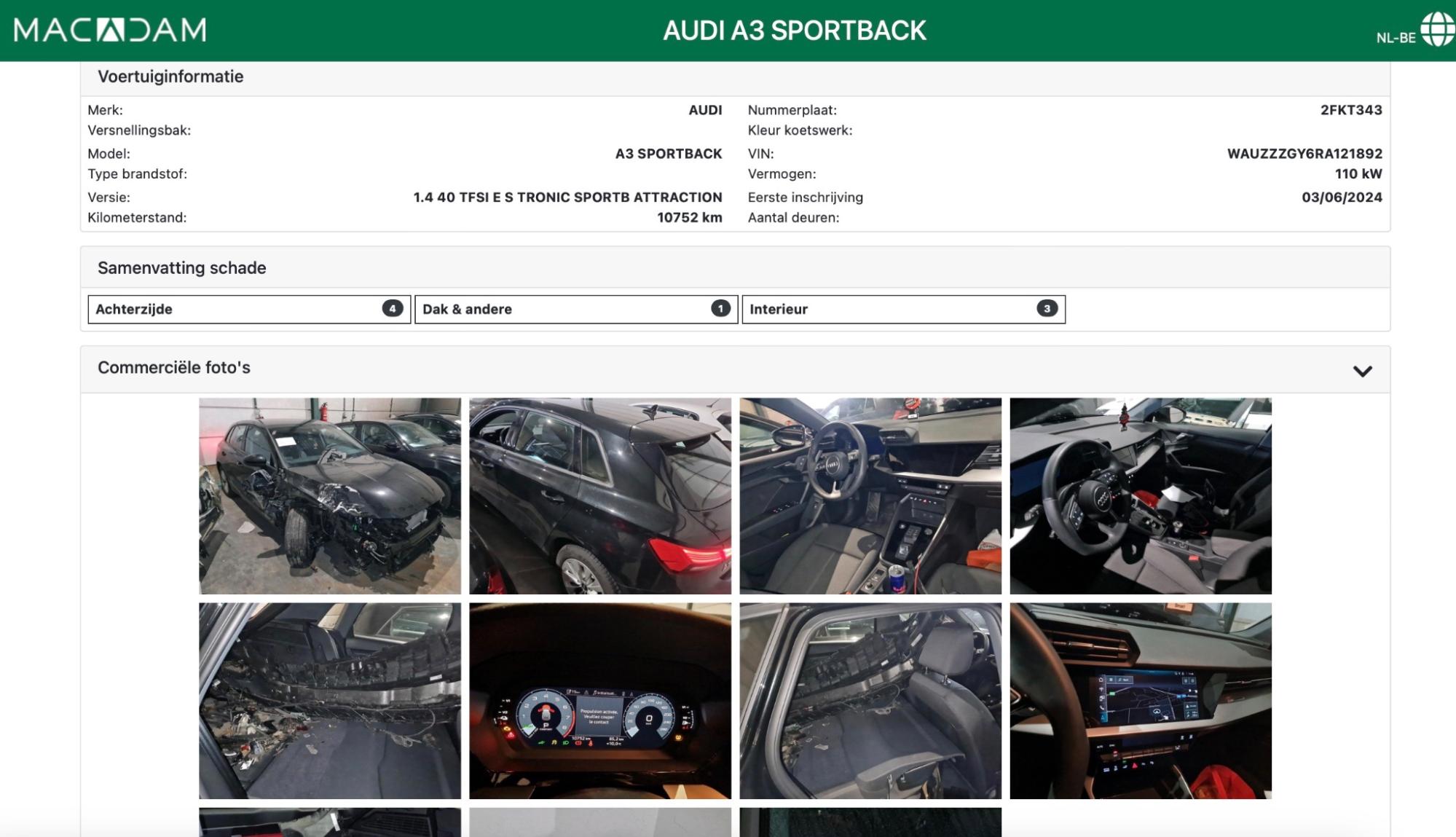
That makes it easier to estimate repair costs, transport needs, and the overall registration risk before purchasing.
How to manage VAT and taxes?
For intra-EU purchases, damaged vehicles usually follow the same VAT rules as other used vehicles.
The fact that a car is damaged does not change how it’s viewed in terms of VAT.
The most important thing that determines VAT for used cars sold in the EU is still the VAT scheme used (the standard VAT scheme or a margin scheme).
Also, there are other costs that you can expect that are not directly connected to VAT.
- Extra inspection fees
- Towing or trailer transport
- Higher insurance costs
- Delayed registration fees
These costs will greatly depend on the country of import, so make sure you check the local registration, inspection, tax, and repair requirements in advance.
Transporting a non-roadworthy vehicle within the EU
In general, non-roadworthy vehicles should be transported on a trailer or transporter. Just because a car still has plates doesn’t mean you can drive it.
That’s why you should plan the transport of damaged vehicles upfront.
If you buy your damaged vehicles on eCarsTrade, we can often help with transport through our eCarsTrade Delivery Service, depending on the type and severity of the damage.
If the vehicle can still be loaded safely, and if you have a forklift to unload the vehicle, eCarsTrade may be able to arrange delivery.
If a vehicle needs a more complex transporter, delivery may still be possible, but it will usually cost more.
Contact us for more info and a custom delivery quote.
In some countries, there are extra rules on whether a car can be driven for export.
In Germany, for example, you can only obtain transit plates if the car has proof that it is roadworthy.
This means that heavily damaged or salvage vehicles usually don’t qualify for the plates, so they need to be transported by truck or trailer instead.
Technical inspection and roadworthiness certification for registration of salvage vehicles
The official roadworthiness inspection for a damaged imported car happens in the destination country after the vehicle arrives.
Most commonly, this is done after the car has been repaired or when it’s ready for registration.
The exact process depends on the country, so it’s best to check your country’s roadworthiness inspection and vehicle registration rules:
- Germany: TÜV / DEKRA roadworthiness inspections
- Netherlands: RDW import and damage inspection process
- Spain: ITV roadworthiness inspections
- Belgium: Vehicle inspection resources
Importing vehicles for parts
While it can be a profitable idea to import a lightly damaged car and repair it before sale, you should treat heavily damaged cars differently.
If you import a salvage car intended for parts, you may have to treat it as an ELV. In other words, you may have to take it to an authorized facility to depollute it first.
Simply google "elv depollution + your country" for a list of organizations that can help you with this process, like this one in Belgium.
This includes removing fuel, oil, brake fluid, coolant, battery, and other hazardous materials.
Once that’s done, reusable parts can be removed and you can resell them.
Before you buy a damaged car
As you can see, in order to make a profitable decision, you have to be really careful when buying damaged cars.
You should start by reading the full description of car listings, checking all the available photos and videos, and reviewing appraisal reports if available.
When buying through eCarsTrade, you can select the Damaged category and quickly browse the available stock.
Each listing also shows key details and a row of document and information symbols that help you see what paperwork or extra information is available.
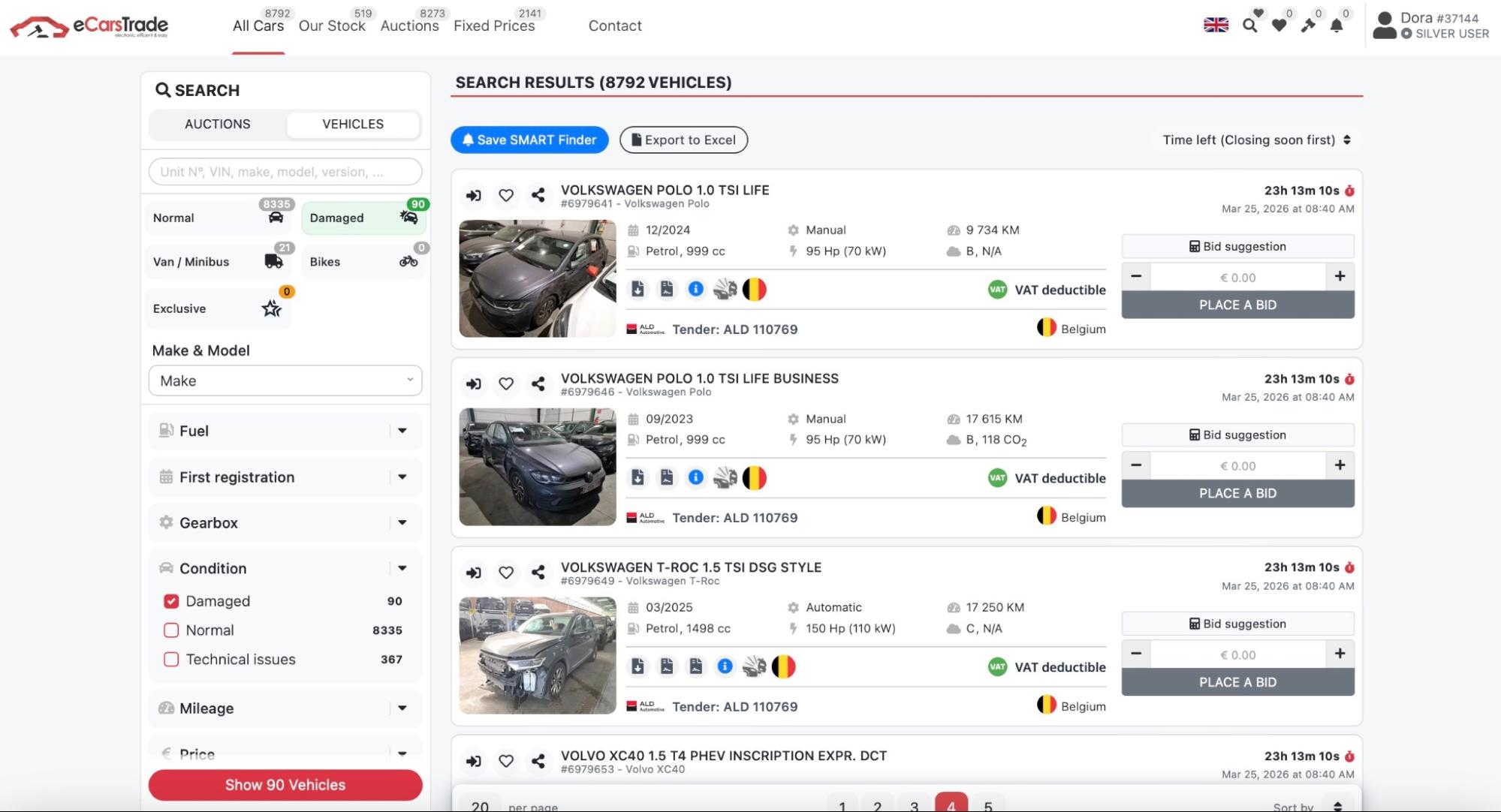
Some cars may have appraisal reports, service history, and videos to help you assess the situation.
But not all vehicles have all these documents, so you should check each listing individually in more detail.
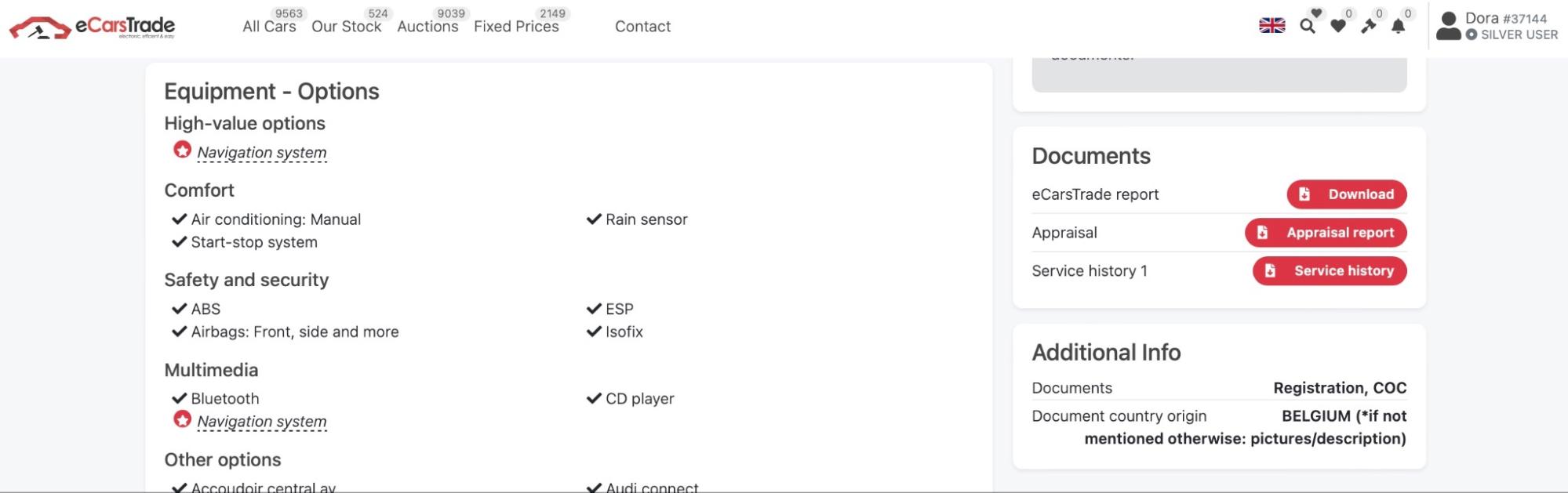
Also, remember that claims are not accepted for damaged cars on eCarsTrade, so make sure you review the listing carefully and assess the risks before you bid.
After you’ve researched the extent of the damage, you should consider another important point: whether the car is likely to face extra inspection or registration steps after repair.
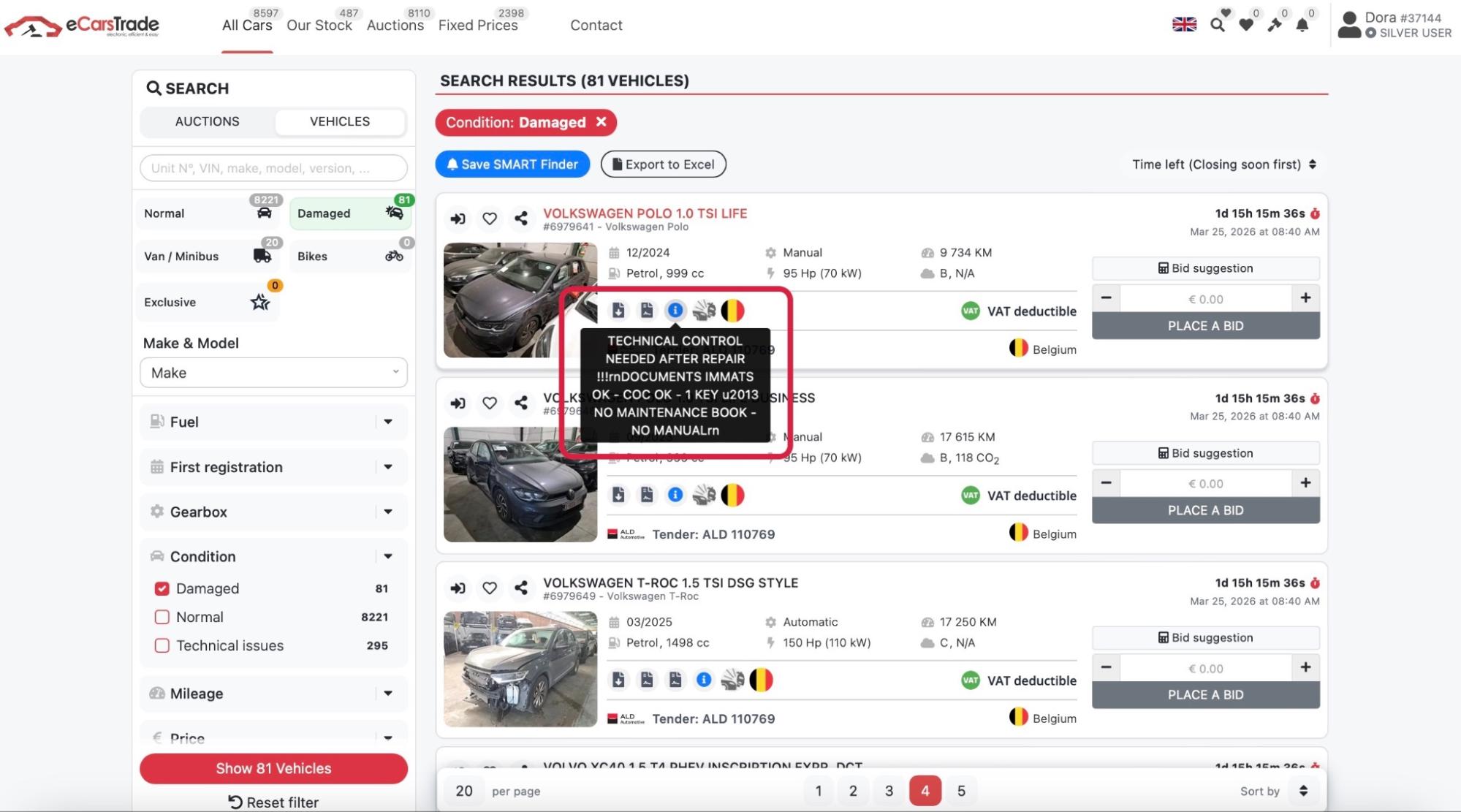
If you see a note such as “Technical control needed after repair” on eCarsTrade, it’s a sign that repairing the car may not be enough on its own.
In that case, the car will usually need to go through an extra inspection after repair before you can register it again.
Before bidding, calculate all the possible extra costs:
- Transport by truck or trailer if the car is not roadworthy
- Insurance during transport
- Parts availability
- Paint and bodywork
- Inspection and registration costs in your country
You might be able to fix minor car damages yourself, but bigger repairs and transport costs can quickly change how much a damaged car is worth.
When you consider all these points, you’ll be able to bid on the right vehicles and turn damaged vehicles into profit.
FAQ
► Can I buy roadworthy damaged cars on eCarsTrade?
Yes, you can find them using the Damaged filter.
Some damaged vehicles listed there are still repairable and may even be roadworthy at the time of sale, but that’s not the case for every damaged vehicle, so check each listing carefully.
► Can eCarsTrade help arrange transport for non-roadworthy vehicles?
Yes, but it depends on the type of damage and how damaged the vehicle is. Contact us for more information and a custom quote.
► Where can I see the damage details on eCarsTrade auctions?
Check the vehicle photos and condition notes. Some listings of damaged cars also include appraisal reports documenting the damage.
► What should I check on the listing to assess registration risk?
Check: registration papers, photos of damage, any available appraisal reports, severity and type of damage, whether the car will need a technical inspection after repair, and if key documents like the COC are included.
► Do I need a COC for salvage vehicles?
The COC usually works the same as for any other imported car: if a country requires a COC for normal registration, you’ll likely need it for a salvage car too.
If a country doesn’t require a COC for regular registrations, you don’t need this certificate for salvage vehicles, either.
► Can an ELV vehicle be registered?
In most cases, you can’t register an ELV vehicle.
► What documents are mandatory to register an imported salvage car?
You’ll need the standard ownership and registration documents, plus any technical, repair, or inspection papers your destination country requires.
► What extra costs should I budget for?
You should budget for transport costs, inspection and reinspection fees, repair and labor costs, storage, and VAT or potential local taxes.
A damaged import can still be worth it, but only if you include those extra costs in your budget before you bid.
Onze uitgebreide inventaris omvat verschillende merken en modellen om aan al uw behoeften te voldoen, rechtstreeks ingekocht bij gerenommeerde Europese autoverhuurbedrijven, kortetermijnverhuurbedrijven en dealerbedrijven: