- Blog
- Latest Updates on the 2035 Ban on ICE Vehicles
Latest Updates on the 2035 Ban on Ice Vehicles
Latest updates on the EU 2035 ICE ban. Learn what is confirmed, what changed, and what the new CO₂ rules mean for petrol, diesel, and used cars.
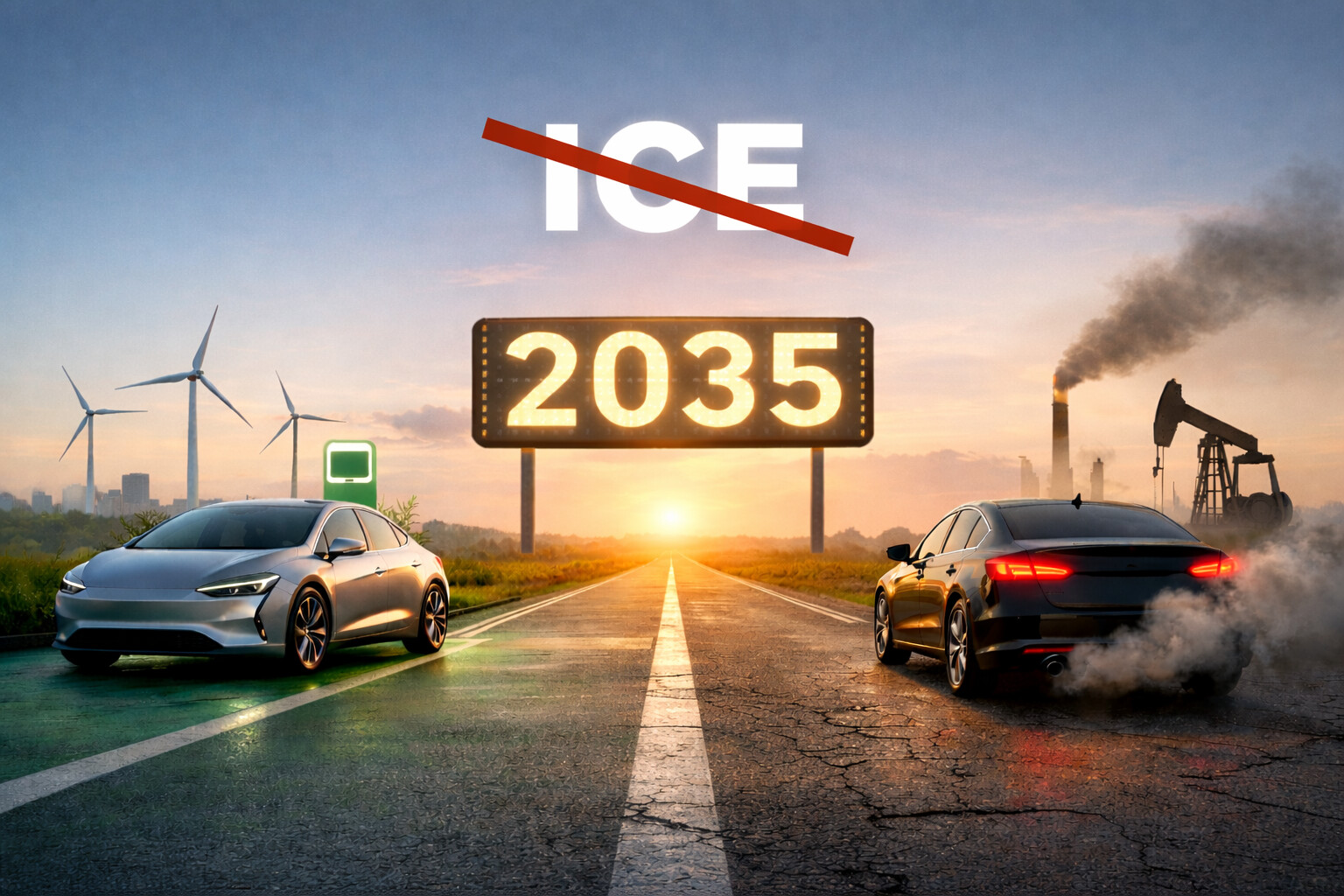
2035 is getting closer, together with the EU’s “ICE ban” for new cars. The main idea behind the rule is simple: from 2035, new cars sold in the EU should have zero CO₂ emissions while driving.
Or at least, that was true until recently. At the end of 2025, there was a small change in which the goal went from 100% reduction in emissions to 90%, with different methods for compensating the remaining 10%.
So, what’s true now? What is the future of diesel and petrol cars in Europe?
Don’t worry, most things are staying the same as planned.
But to make this change easier to follow, we’ll cover the timeline of the ICE ban, explain what is confirmed today, and summarize what this means in practice for the used-car market.
Timeline
First, let’s see how the 2035 plan evolved from a proposal to today’s rules.
The original 2035 ICE ban proposal (2021 and 2022)
In July 2021, the European Commission proposed stricter CO₂ rules for new cars and vans. This proposal is where the 2035 target was first introduced.
In October 2022, the EU countries and the European Parliament agreed on the updated targets for new cars and vans.
The targets defined the main milestones that dealers usually hear about:
- By 2030: average CO₂ emissions of new cars must be 55% lower than 2021 levels.
- By 2030: average CO₂ emissions of new vans must be 50% lower than 2021 levels.
- From 2035: average CO₂ emissions of new cars and new vans must be 100% lower than 2021 levels.
The 100% CO₂ reduction in 2035 is the main reason why people call this policy the ICE ban for new cars.
The proposal becomes law (2023)
The idea that was previously a proposal became a binding regulation in 2023. Its name is Regulation (EU) 2023/851.
Before that, people were skeptical about whether the EU would actually ban new ICE sales.
But once the regulation was adopted and published, the 2035 target became part of the official EU rules.
Current status - as of January 2026
As of January 2026, Regulation (EU) 2023/851 is still the rule the EU follows. So, the ban is still expected for 2035.
The newest revision of 2035 ICE ban in the EU
Although the emissions goal is still here, there’s been an additional proposal that has slightly changed how the 2035 target will be applied.
The European Commission has presented the Automotive package, which is a group of proposals meant to support the car industry.
In simple terms, the Commission suggests moving from a 100% CO₂ reduction in 2035 to a 90% reduction.
The remaining 10% would be compensated through measures like using low-carbon steel made in the EU or fuels like e-fuels and biofuels.
Keep in mind that this is still only a proposal, and the Regulation is the main thing to follow.
But if the Automotive package gets approved, we may still see new hybrids and some other low-emission ICE models sold after 2035, along with zero-emission cars.
Why is the EU reconsidering the 2035 rules?
If the EU still wants to reduce emissions related to transport, why is there a change in the 2035 rule at all?
There are two main reasons, and both are connected to the practicality of the ICE ban.
► Automotive industry pressure
First, car makers and automotive companies have been asking for more flexibility in the 2035 rules.
For instance, ACEA has argued that it’s hard to reach the 2035 target under today’s market conditions.
Several big European car manufacturers have made similar comments, including Volkswagen, BMW, Renault, and Stellantis.
► Member state opposition
Another reason is that several EU countries have been asking for changes, too.
Euronews reported that seven member states asked the Commission to make the 2035 approach more flexible by allowing hybrids and other alternatives to continue after 2035.
Industry reacts: Who supports and who opposes the newest changes?
As you’ve seen, car manufacturers and those working in the automotive industry are the ones opposing the upcoming restrictions.
On the other hand, Transport & Environment (T&E) claims that the new adjustments will create loopholes and slow down the switch to fully electric new cars.
Seeing as there are opposing views of the situation, the Automotive Package looks like a compromise: it keeps the 2035 goal, but adds more flexibility for carmakers.
Can you expect an impact on the EU used car market in 2026?
There’s almost another decade before new ICE car sales become limited, so the car market shouldn’t see any drastic changes yet.
Also, it’s worth noting that used ICE cars will be allowed on the roads even after 2035, meaning there will still be plenty of demand for petrol and diesel cars in the used market.
Of course, don’t forget to follow yearly analyses of the EU and regional markets so that you can spot changes early, like demand for different fuel types or new local environmental rules.
More for dealers
Should you adjust your 2026 sourcing & sales strategy?
There’s no need for dramatic changes in what cars you’re stocking yet.
It’s always a good idea to buy some EVs for your stock, but that’s because many European countries are steadily increasing EV adoption, not only because of the 2035 rules.
At the same time, remember that most used cars across Europe are fueled by diesel and petrol, so it makes sense to keep sourcing what sells well in your market today.
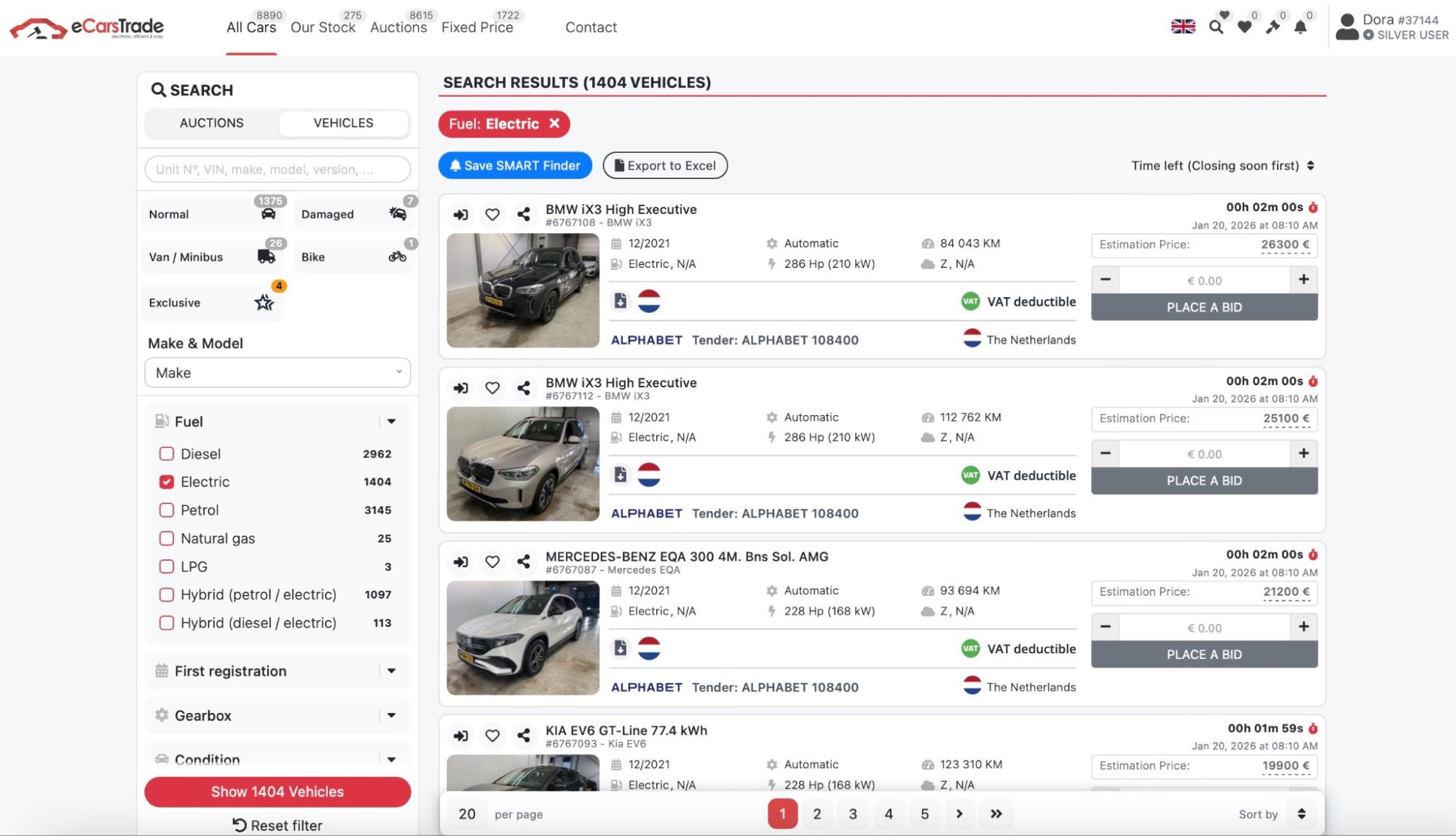
If you are buying on eCarsTrade, you can also use the Fuel filter to quickly focus on the fuel types that match demand in your region.
FAQ
► Will ICE cars be banned in 2035?
You and your buyers will be able to drive the existing ICE cars normally. Only the sale of new pure petrol or pure diesel vehicles will be limited from 2035 under the current EU rules.
► Can I still buy a petrol car after 2035 in Europe?
You will still be able to buy and sell used petrol cars. The EU rule targets new vehicles only.
► What happens to my diesel car after 2035?
Nothing will automatically happen to existing ICE cars because of this rule—it only affects new cars.
_01JE9WH8CRTMG3B3WDH56WNJHD.png)